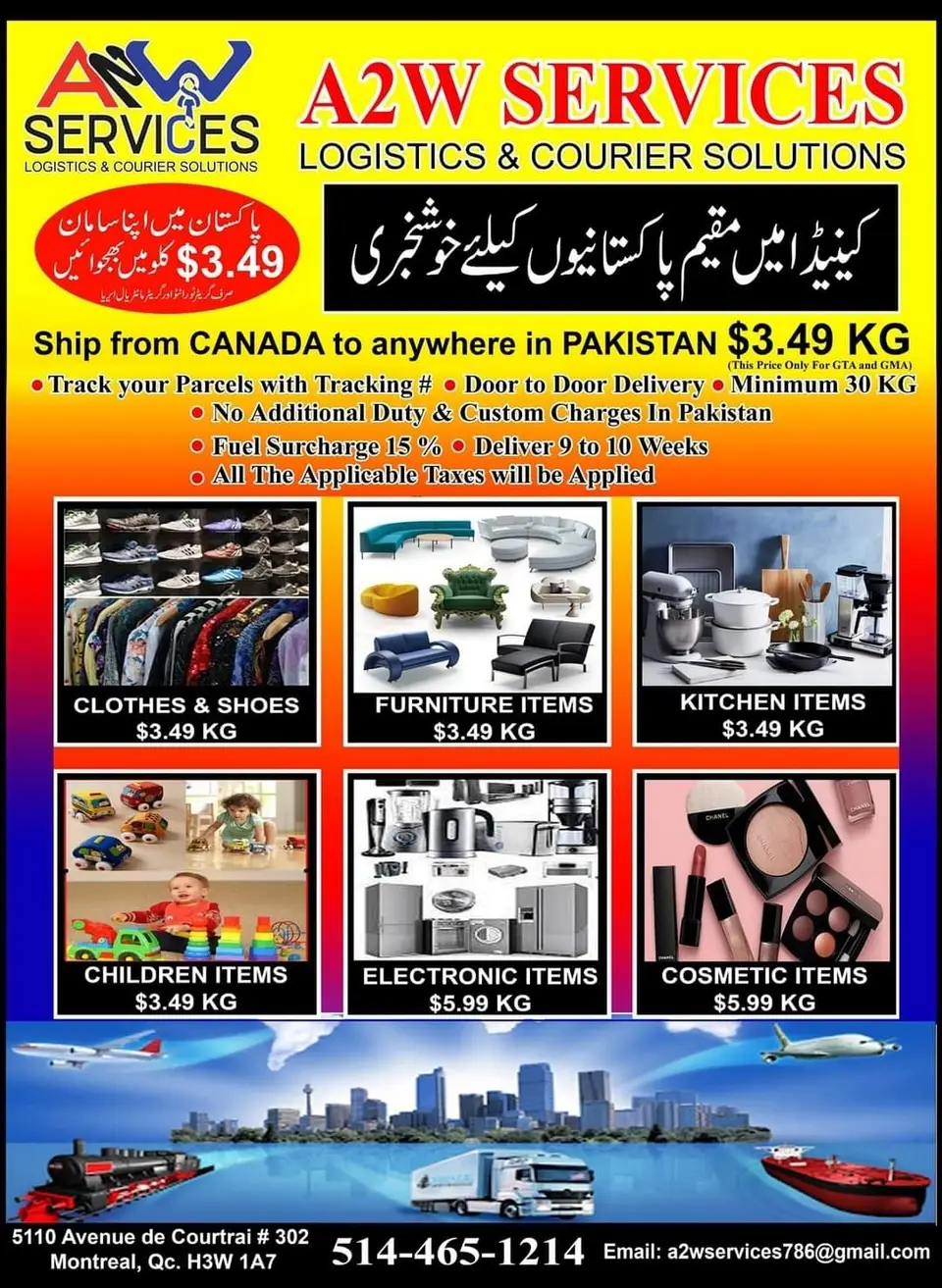
Sending personal cargo and importing goods for a Canadian business are different tasks. This collection selects published businesses whose activity information explicitly mentions Pakistan and shipping, freight or logistics. It does not assume every importer serves this corridor or that a carrier acts as a customs broker.
Define the shipment before comparing prices
Tell a provider the collection and destination cities, whether the goods are commercial or personal, and the approximate size and weight. Describe the commodity and packaging without supplying identity documents in an open inquiry. Ask whether the proposal covers collection, terminal handling and final delivery. A port-to-port quotation should not be compared as though it were a door-to-door service.
Separate transport from customs responsibilities
For commercial imports into Canada, use the CBSA’s current importing guide to understand the required steps. Discuss who is the importer, who prepares declarations and whether a licensed customs broker is involved. Duties, taxes, permits and product requirements can depend on the goods. Directory inclusion is not evidence that a carrier can clear every product or guarantee entry into either country.
Ask about the awkward parts of the journey
Request the route, estimated transit range and the way delays are communicated. Confirm how damage or loss is handled, what insurance is available and which exclusions apply. Ask about storage, failed delivery and charges at destination. Do not infer a guaranteed arrival day from a general air- or sea-freight description. Have the provider put the agreed service and assumptions in writing.
Build a trade team when the shipment is commercial
Manufacturers, distributors, freight providers and professional advisers perform different roles. A business exploring Canada–Pakistan trade may need separate advice about contracts, payment, taxation and product compliance. Start with the actual transaction and identify the missing expertise. This page provides contact routes and a preparation checklist, rather than endorsing a supplier, estimating import profitability or promising regulatory approval.